Balance is All About Spinal Health

How Your Spine and Brain Talk to Keep You Balanced
Have you ever wondered how you can walk on uneven ground or close your eyes and still know exactly where your feet are? We often think of balance as something that happens in our inner ear, but groundbreaking research by Dr. Heidi Haavik reveals that your spine plays a crucial role in how your brain perceives and controls your body.
The Secret Communicators: Your Paraspinal Muscles
Deep within your back, closest to your spine and skull, are tiny "paraspinal" muscles. These aren't the big muscles you use to lift heavy boxes; instead, their primary job is to act as sensory organs. They are packed with "muscle spindles" that constantly send high-speed information to your brain about your body’s position.
When these muscles are healthy and active, your brain has a crystal-clear "internal representation" (or map) of what is happening both inside and outside your body.
When the Map Goes Blurry: The "3 Ts"
Stress, injuries, and inflammation—often referred to as "Thoughts, Traumas, and Toxins"—can disrupt this communication. According to Haavik’s research, chronic physiological stress causes your big "fight-or-flight" muscles to become stiff and sore while your small, deep paraspinal muscles become "neurologically inhibited"—essentially, they "go to sleep".
When these muscles stop sending accurate signals, the brain receives "altered messages" from the spine. This creates a self-perpetuating cycle where the brain no longer knows exactly where the spine or limbs are or what they are doing, leading to:
- Poor body awareness
- Decreased body control
- Reduced physical function
The Role of the Brain: Prefrontal Cortex and Cerebellum
The information from your spine doesn't just go anywhere; it specifically impacts key areas of the brain responsible for balance and movement:
- The Prefrontal Cortex: This area is responsible for "Executive Functions" like planning, movement control, and emotional regulation. Haavik’s research shows that spinal dysfunction can actually "turn off" or dampen the activity in this region.
- The Cerebellum: This is the brain’s primary "movement control" center. It maintains your "world schemas" (your perception of reality) and helps you learn new motor skills.
"Waking Up" the Brain Through Chiropractic Care
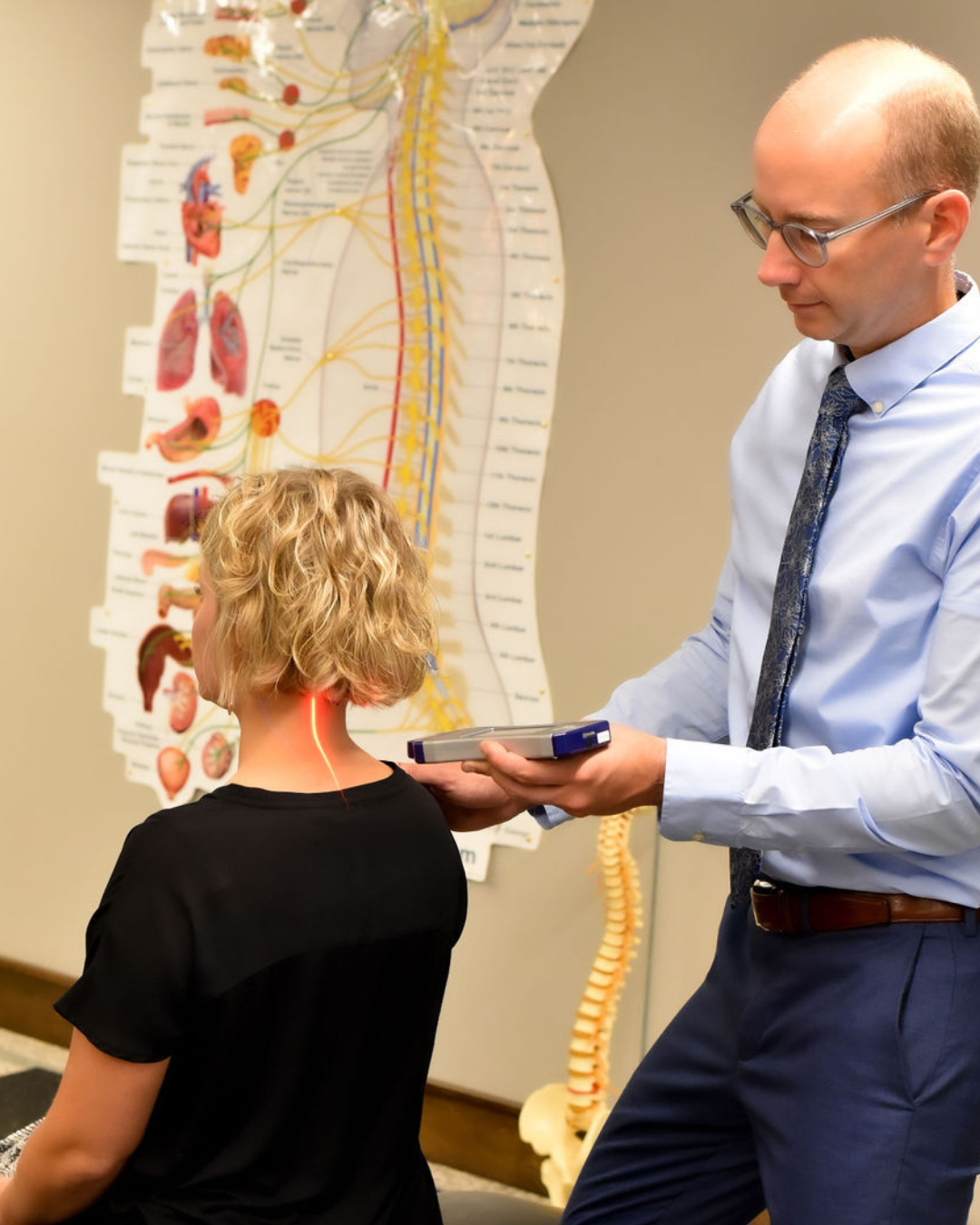
This is where chiropractic care enters the picture. A chiropractic adjustment does more than just move a joint; it "bombards" the brain with fresh sensory input (mechanoreceptor input) by stretching those small, deep paraspinal muscles.
This process creates neuroplastic effects, meaning the brain actually changes its structure and function in response. After an adjustment, the brain:
- Knows more accurately what is going on in the body.
- Updates its internal maps for better balance and coordination.
- Shows changes in connectivity within the prefrontal cortex and other vital regions.
Real Results for Real Life
Haavik’s findings from 2024 highlight that these brain changes lead to tangible physical benefits, including:
- Improved physical function and less pain.
- Better sleep quality, specifically an increase in REM and light sleep.
- Reduced fatigue and improved mental health markers.
By ensuring your spine is moving correctly, you aren't just taking care of your back—you are giving your brain the accurate information it needs to keep you balanced, focused, and healthy.
References
Haavik, H. (2023). The Contemporary Model of the Subluxation. Palmer College of Chiropractic [Presentation].
Haavik, H., Kumari, N., Holt, K., Niazi, I.K., Amjad, I., Pujari, A.N., Türker, K.S., & Murphy, B. (2021). The contemporary model of vertebral column joint dysfunction and impact of high-velocity, low-amplitude controlled vertebral thrusts on neuromuscular function. European Journal of Applied Physiology (121). pp.2675–2720. https://doi.org/10.1007/s00421-021-04727-z
Niazi, I., Navid, M., Merkle, C., Amjad, I., Kumari, N., Trager, R., Holt, K., & Haavik, H. (2024). A randomized controlled trial comparing different sites of high-velocity low amplitude thrust on sensorimotor integration parameters. Scientific Reports. (14). doi: 10.1038/s41598-024-51201-9.